Community Hub

Community Hub
Digital Dignity Series #1: Account username and passwords
Project ProtocolJuly 21, 2025
We know that life moves fast outside – and the digital world doesn’t slow down for anyone. Researchers and policymakers are recognizing what many of us already know: a growing digital divide is leaving system-impacted people behind.
That’s why we’re launching a new monthly digital zine called The Digital Dignity Series— a tech guide designed for people navigating reentry, their families, and anyone impacted by the criminal justice system. Whether you’re applying for jobs, connecting with loved ones, or just trying to fulfill your parole or probation requirements, this series was created to break down the basics to help you move through the digital world with more power, confidence, and autonomy. We’ll cover topics like:
Logging into accounts
Using online services and maps
Protecting your data
Spotting scams
But more than that, this series is about power. Understanding how your data is used– by big businesses and the criminal justice system– helps us stay prepared, not exposed. Your digital security protects mine, too.
Check out the first part of the series below!
Entering your account
Username
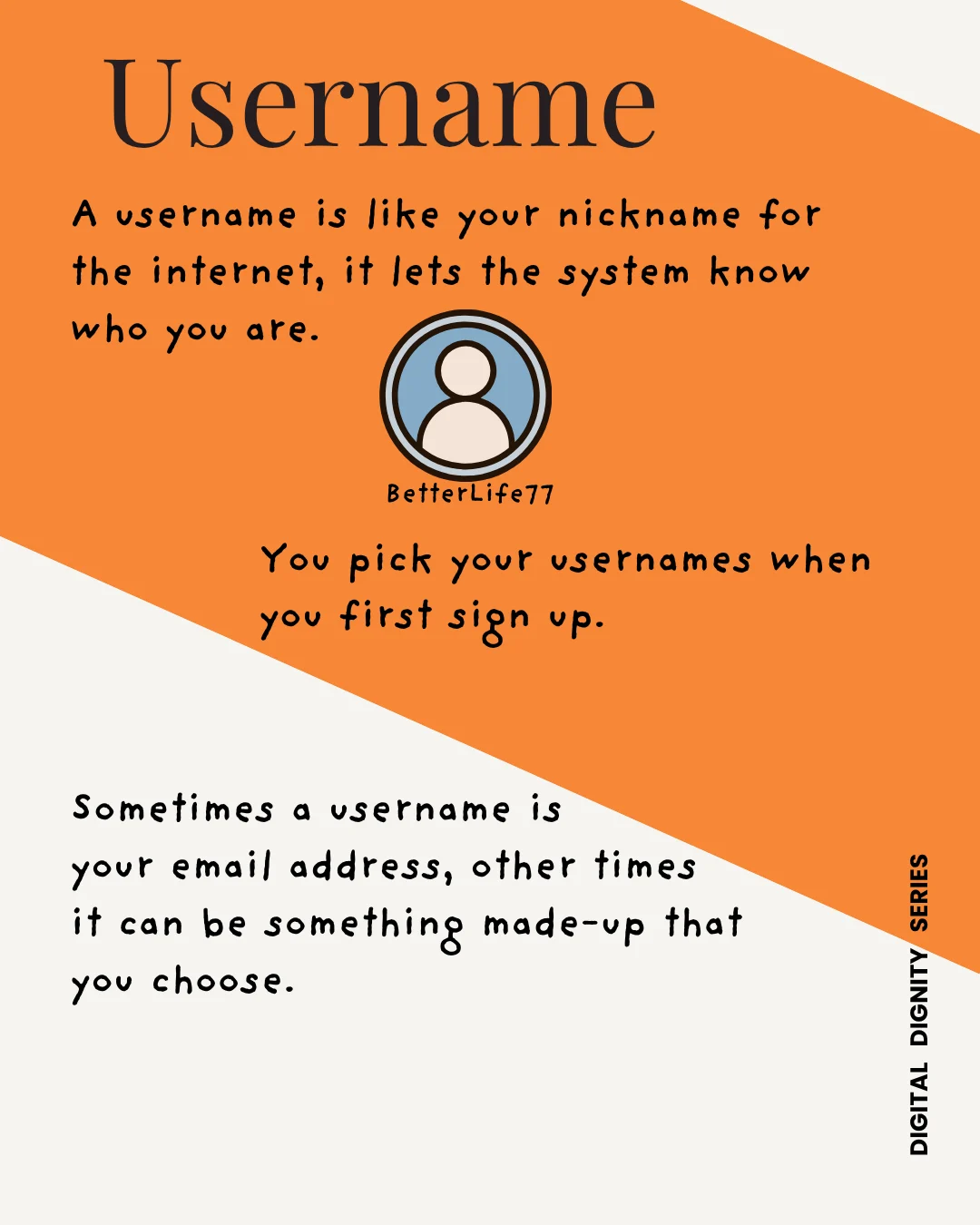
A username is like your nickname for the internet, it lets the system know who you are.
You pick your usernames when you first sign up.
Sometimes a username is your email address, other times it can be something made-up that you choose.
Passwords
Your password is a secret key.
It unlocks your account so only you can open it.
You don’t want to lose your password, and you don’t want anyone else to know it that you don’t trust.
Self-Security
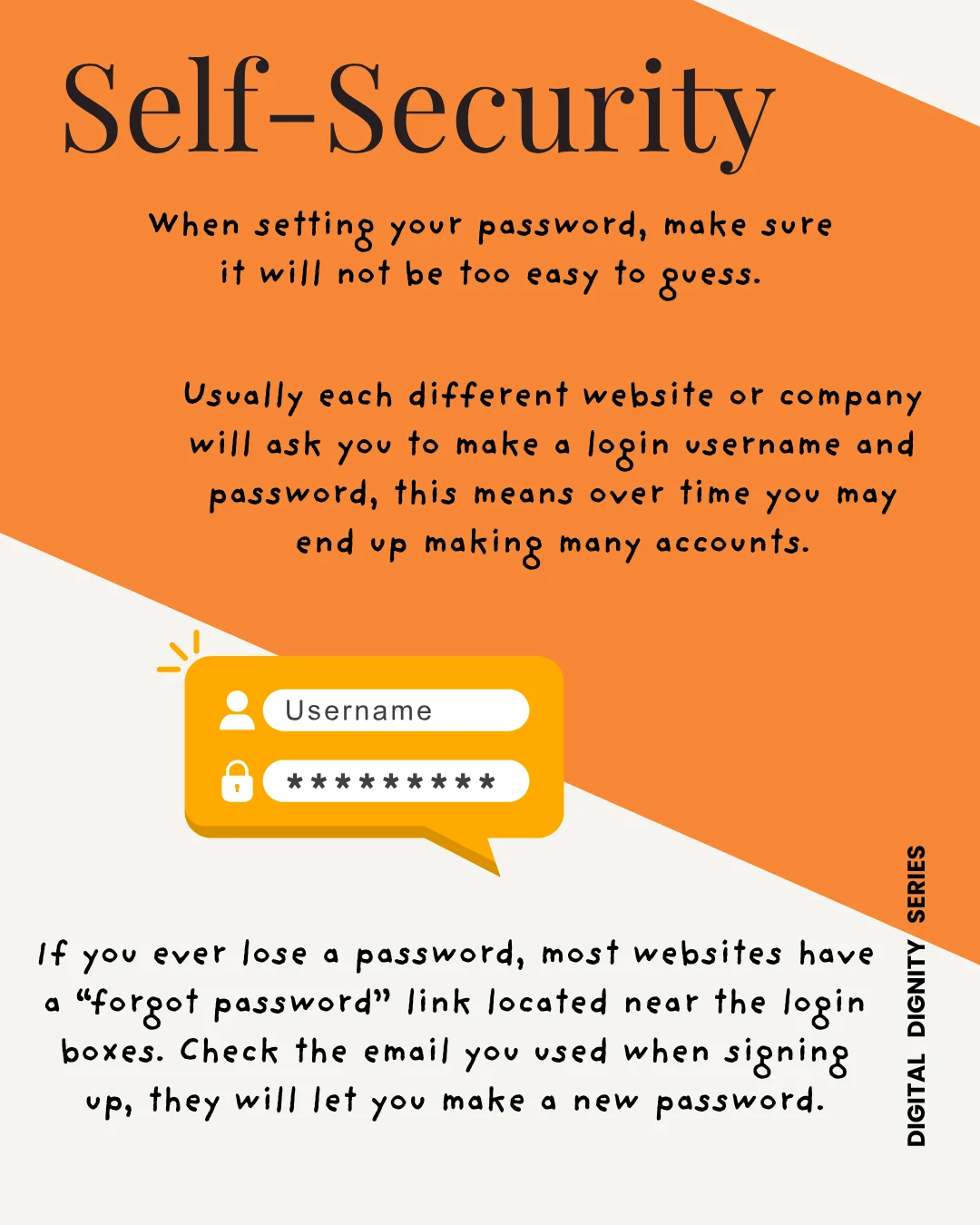
When setting your password, make sure it will not be too easy to guess.
Usually each different website or company will ask you to make a login username and password, this means over time you may end up making many accounts.
If you ever lose a password, most websites have a “forgot password” link located near the login boxes. Check the email you used when signing up, they will let you make a new password.
Community Hub