Community Hub

Community Hub
Digital Dignity Series #2: Big Data: the who, how, why, and what to do
Project ProtocolAugust 21, 2025
Staying safe under digital surveillance
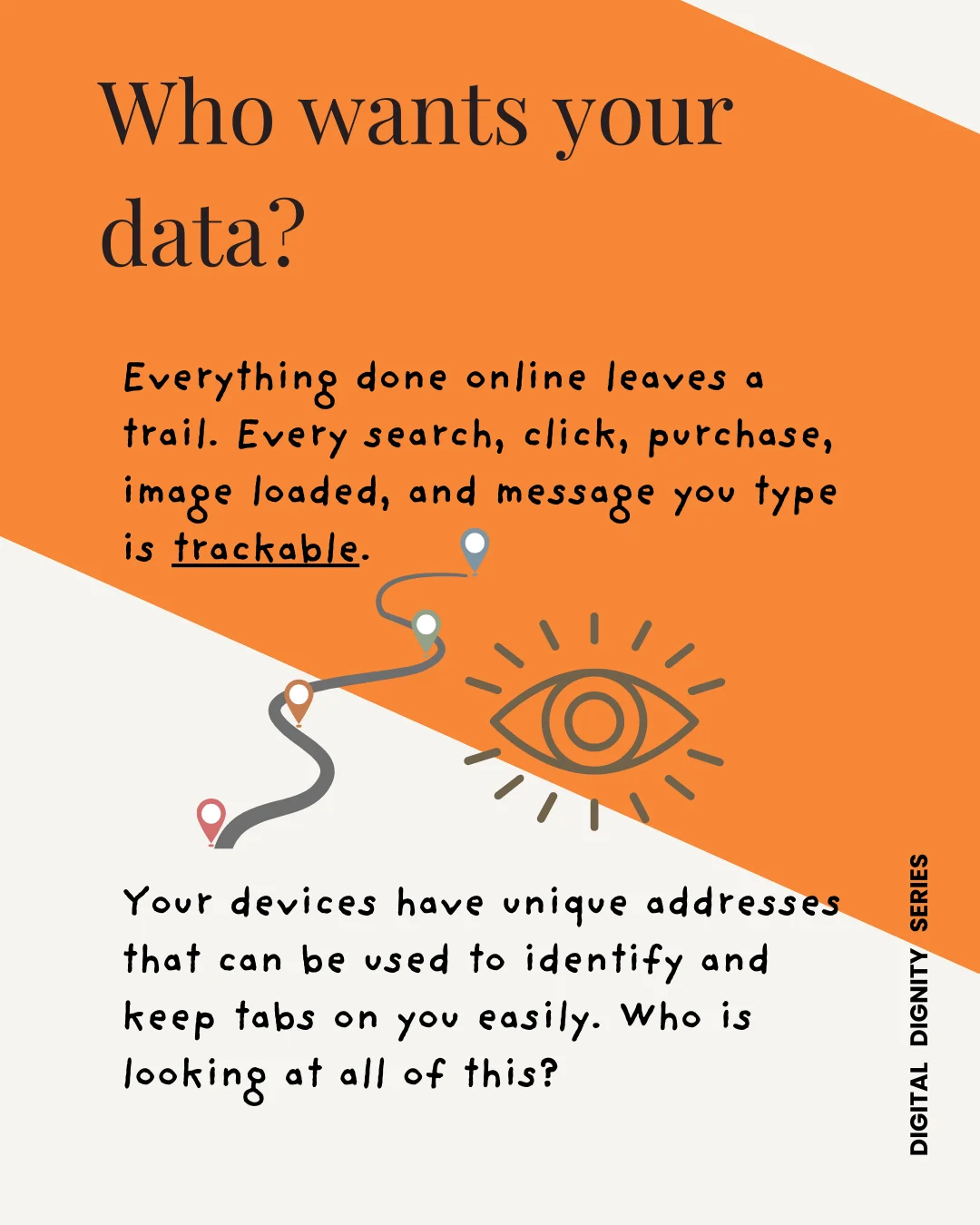
Who wants your data?
Everything done online leaves a trail. Every search, click, purchase, image loaded, and message you type is trackable.
Your devices have unique addresses that can be used to identify and keep tabs on you easily. Who is looking at all of this?
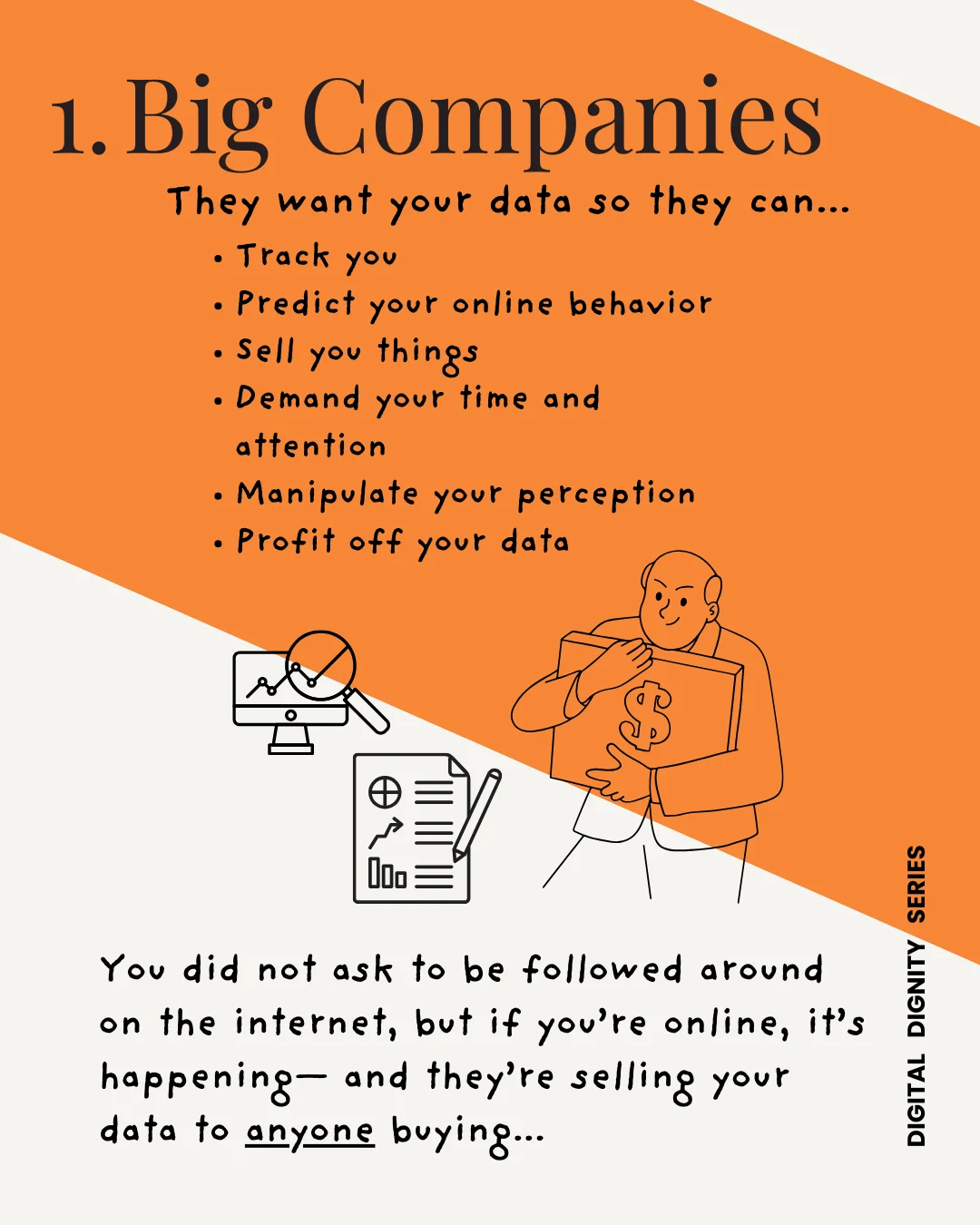
1. Big companies
They want your data so they can track you, predict your online behavior, sell you things, demand your time and attention, manipulate your perception, and profit off your data.
You did not ask to be followed around on the internet, but if you’re online, it’s happening– and they’re selling your data to anyone buying…
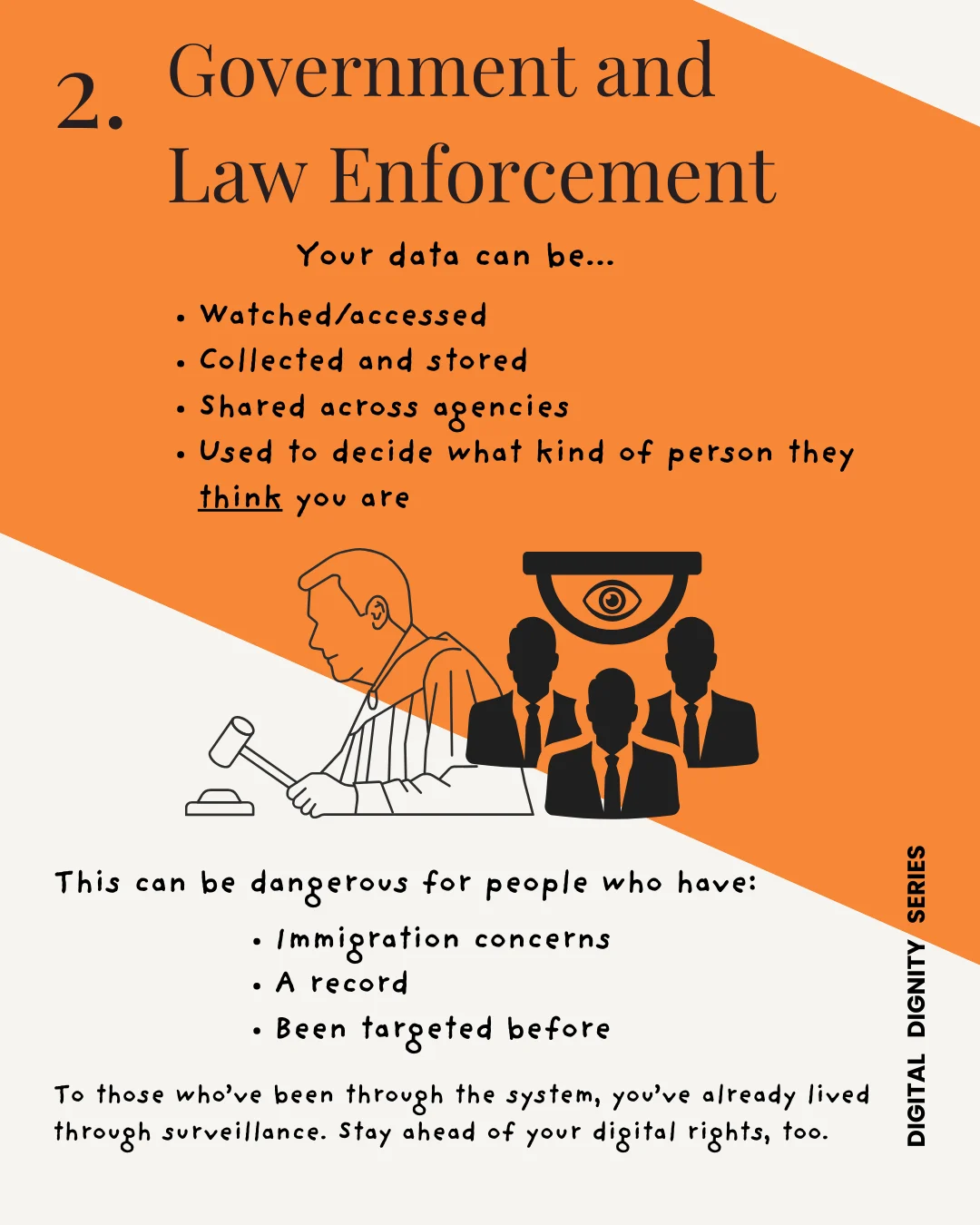
2. Government and Law Enforcement
Your data can be watched and accessed, collected and stored, shared across agencies, and used to decide what kind of person they think you are.
This can be dangerous for people who have immigration concerns, a record, or who have been targeted before.
To those who’ve been through the system, you’ve already lived through surveillance. Stay ahead of your digital rights, too.
3. Scammers
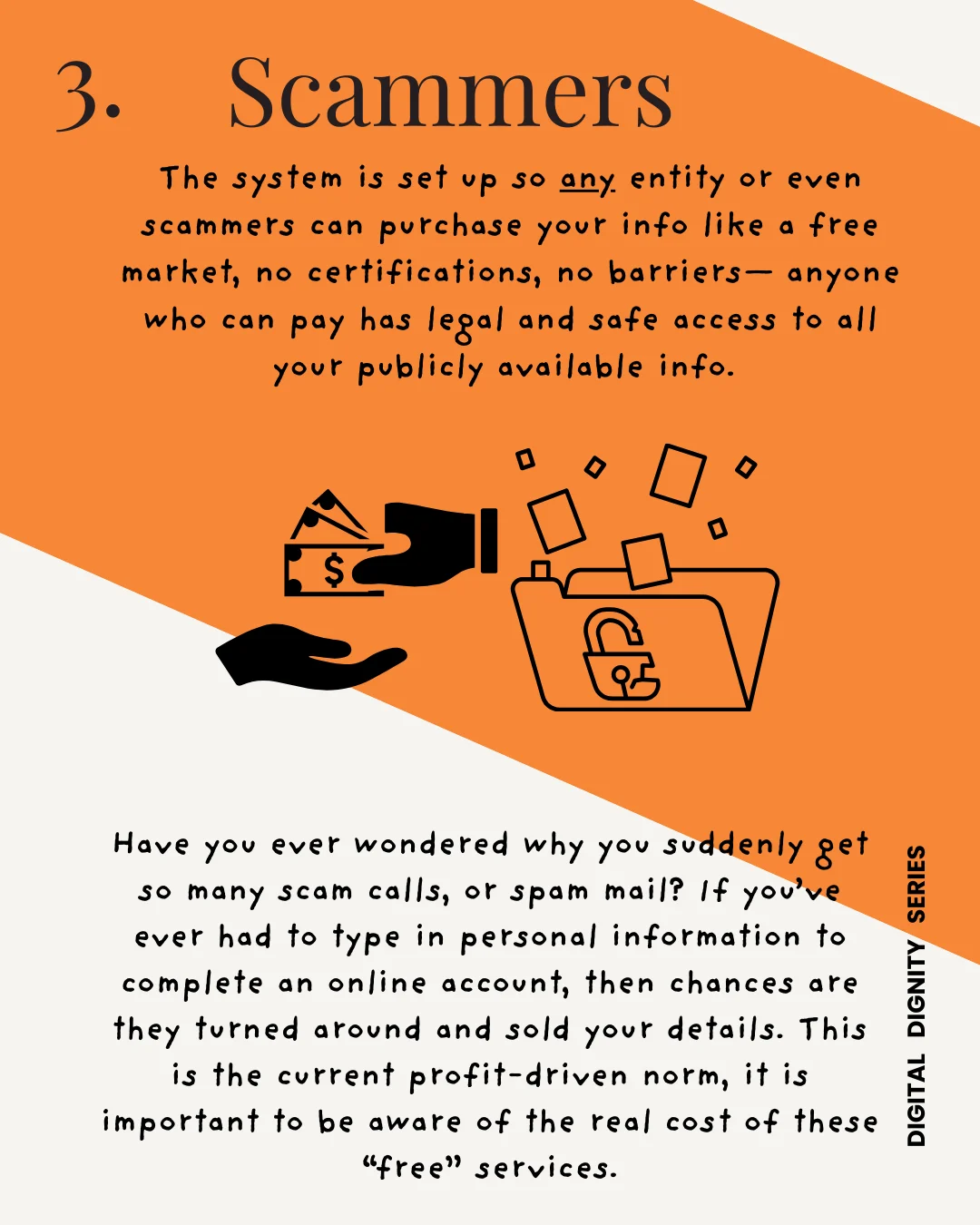
The system is set up so any entity or even scammers can purchase your info like a free market, no certifications, no barriers– anyone who can pay has legal and safe access to all your publicly available info.
Have you ever wondered why you suddenly get so many scam calls, or spam mail? If you’ve ever had to type in personal information to complete an online account, then chances are they turned around and sold your details. This is the current profit-driven norm, it is important to be aware of the real cost of these “free” services.
How does it happen? Algorithms.
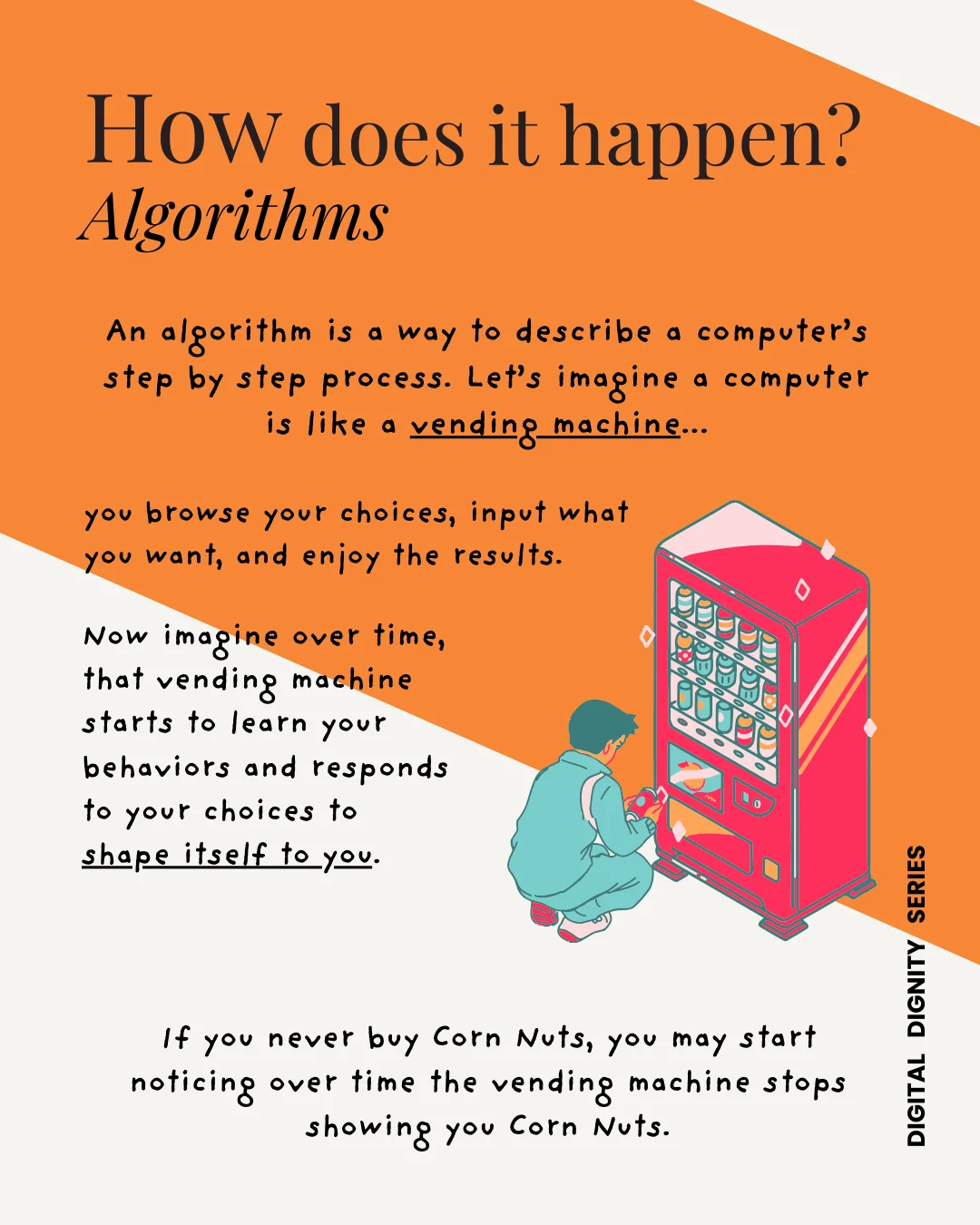
An algorithm is a way to describe a computer’s step by step process. Let’s imagine a computer is like a vending machine…
You browse your choices, input what you want, and enjoy the results. Now imagine over time, that vending machine starts to learn your behaviors and responds to your choices to shape itself around you.
If you never buy Corn Nuts, you may start noticing over time the vending machine stops showing you Corn Nuts.
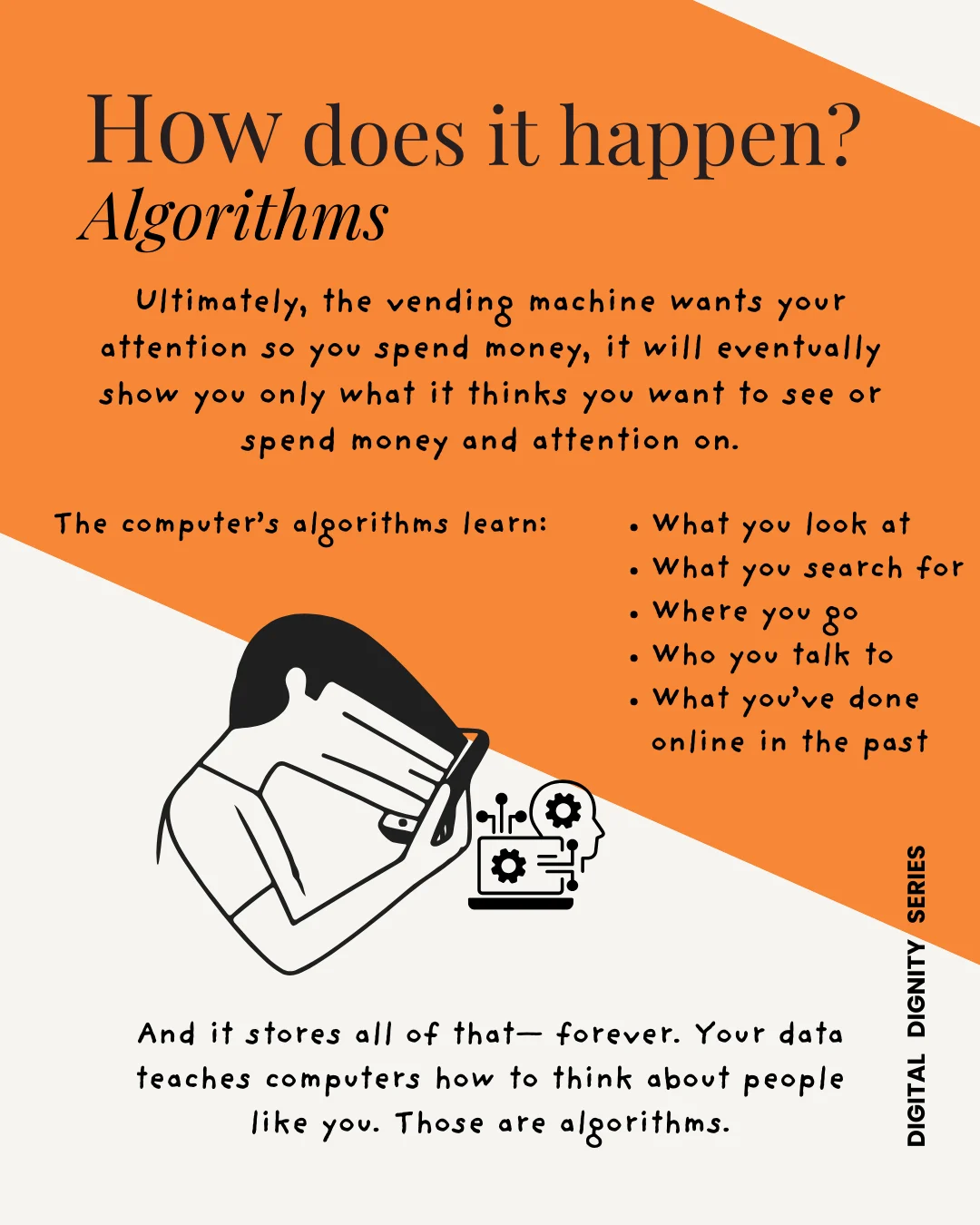
Ultimately, the vending machine wants your attention so you spend money, it will eventually show you only what it thinks you want to see or spend money and attention on.
The computer’s algorithms learn: what you look at, what you search for, where you go, who you talk to, and what you’ve done online in the past. It stores all of that– forever. Your data teaches computers how to think about people like you. Those are algorithms.
Why it matters
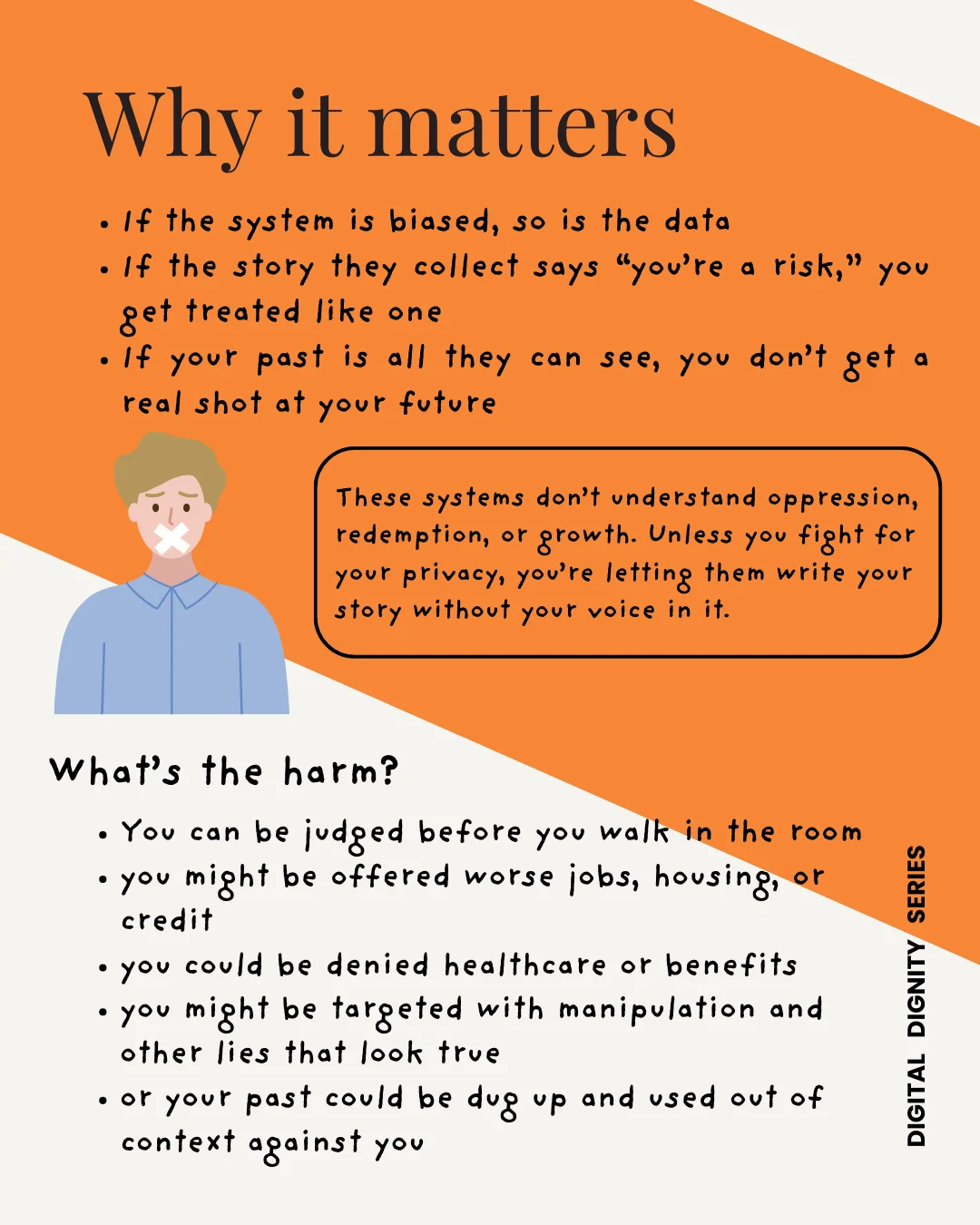
If the system is biased, so is the data. If the story they collect says “you’re a risk,” you get treated like one. If your past is all they can see, you don’t get a real shot at your future.
These systems don’t understand oppression, redemption, or growth. Unless you fight for your privacy, you’re letting them write your story without your voice in it.
What’s the harm?
You can be judged before you walk in the room. You might be offered worse jobs, housing, or credit. You could be denied healthcare or benefits. You might be targeted with manipulation and other lies that look true. Or your past could be dug up and used out of context against you.
What to do
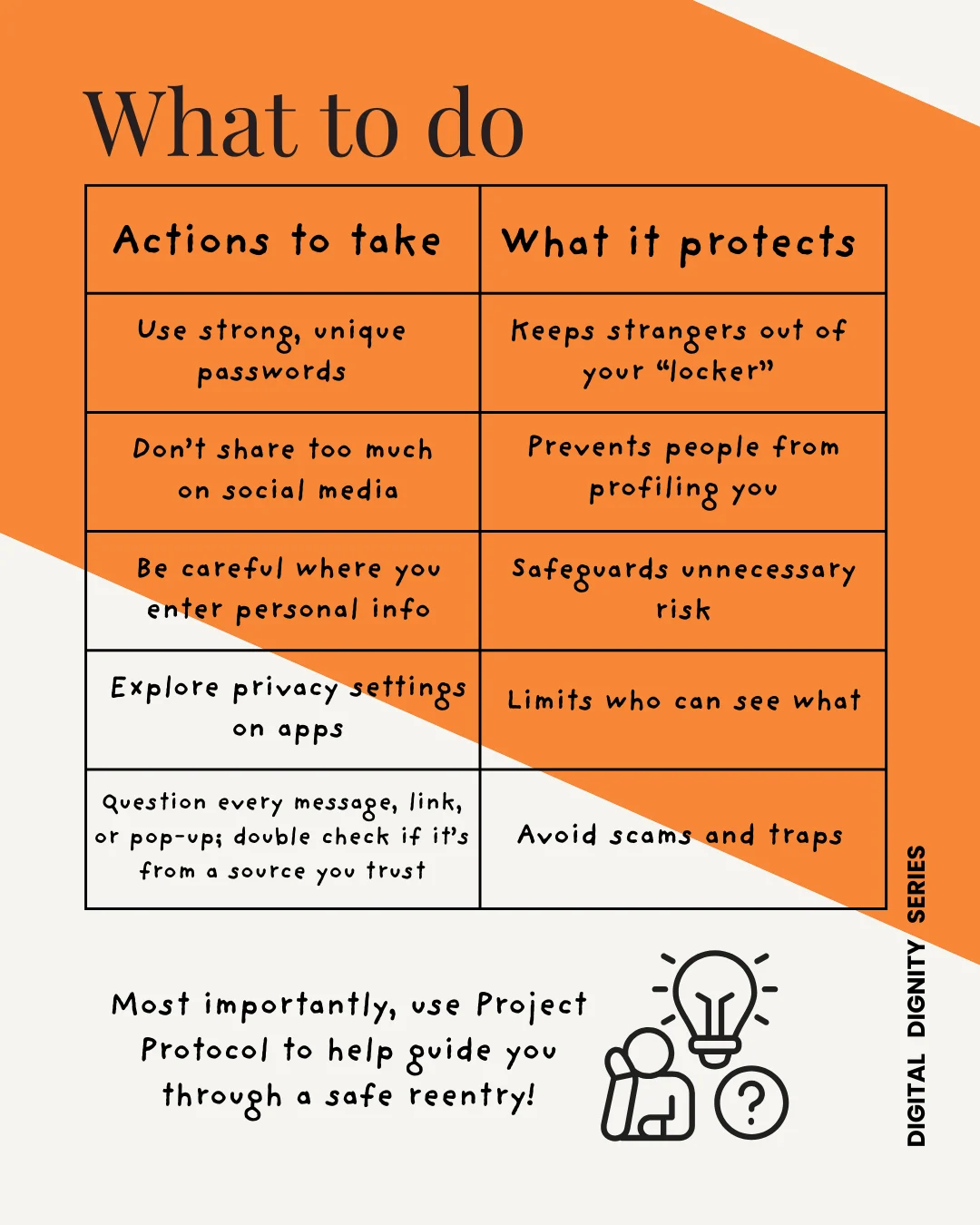
Here are some actions to take and what those actions protect:
Use strong unique passwords to keep strangers out of your “locker”.
Don’t share too much on social media, it will prevent people from easily profiling you.
Be careful where you enter personal information, this will prevent unnecessary risk.
Explore privacy settings on apps, you can limit who can see what.
Question every message, link, or pop-up; double check if it’s from a source you trust to help avoid scams and traps.
Most importantly, use Project Protocol to help guide you through a safe reentry!
Community Hub